


TakeVijfExperts in public-private partnerships

Area Development

Accelerating greenfield and urban expansion sites with The DUO-Model™

Clear separation of commissioning and delivery

Speed through disciplined commissioning and mandated delivery

Given intense housing market pressure, area development on expansion sites revolves more than ever around speed: how do you move from masterplanning to the delivery of homes and a complete living environment without avoidable delays?

In area development, collaboration between government and market — depending on land ownership — can take several forms: from a straightforward cooperation agreement (SOK) to an anterior development agreement or a joint development company. The primary distinction lies in where executive primacy rests: with the private partner, the public partner, or a joint entity.

Whatever legal form is chosen, genuine progress only occurs when choices and commissions are unambiguous and passed smoothly like a relay baton to delivery, ensuring no time is lost once decisions have been made.

The DUO-Model™ serves as our toolkit to build a decisive organization across any of these partnership models that maintains momentum and solves the complex challenges inherent in area development.

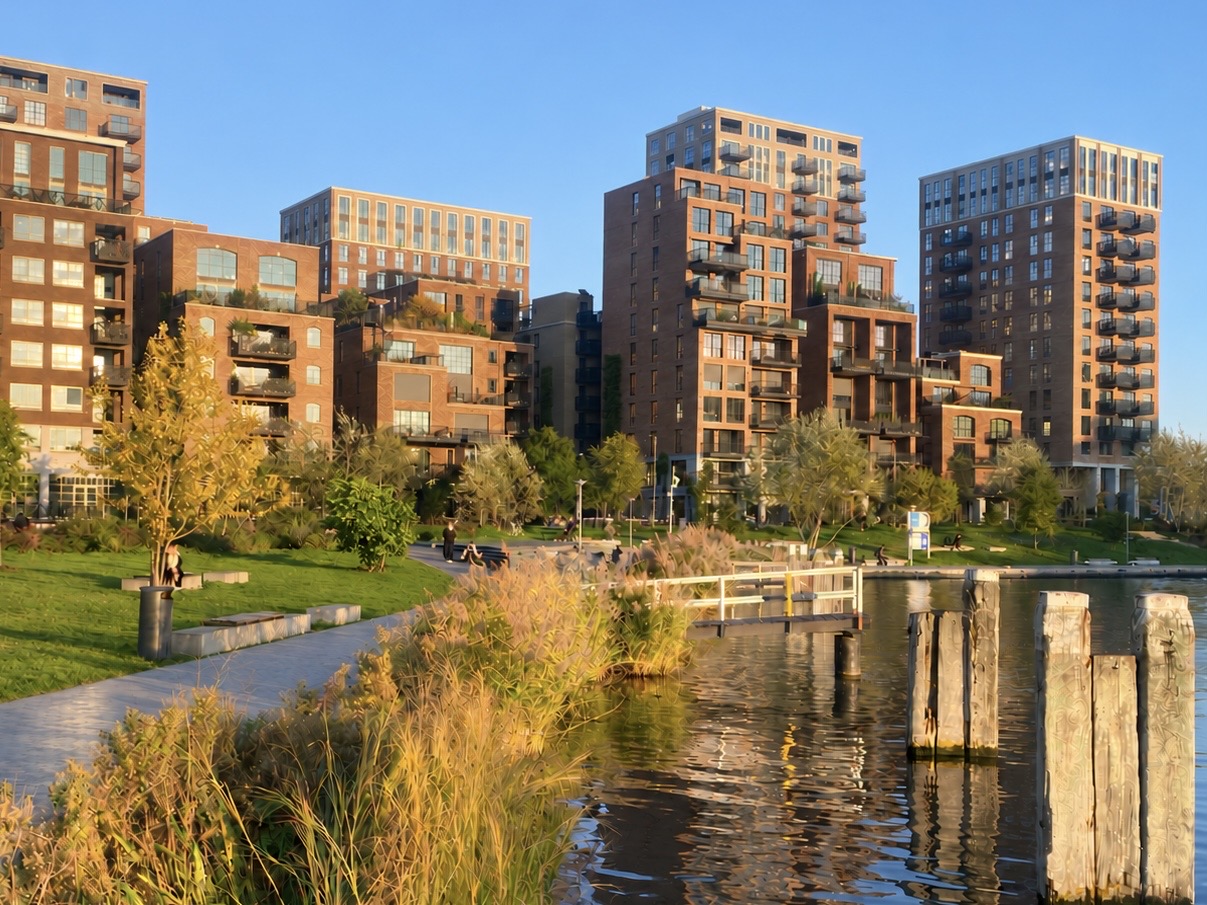
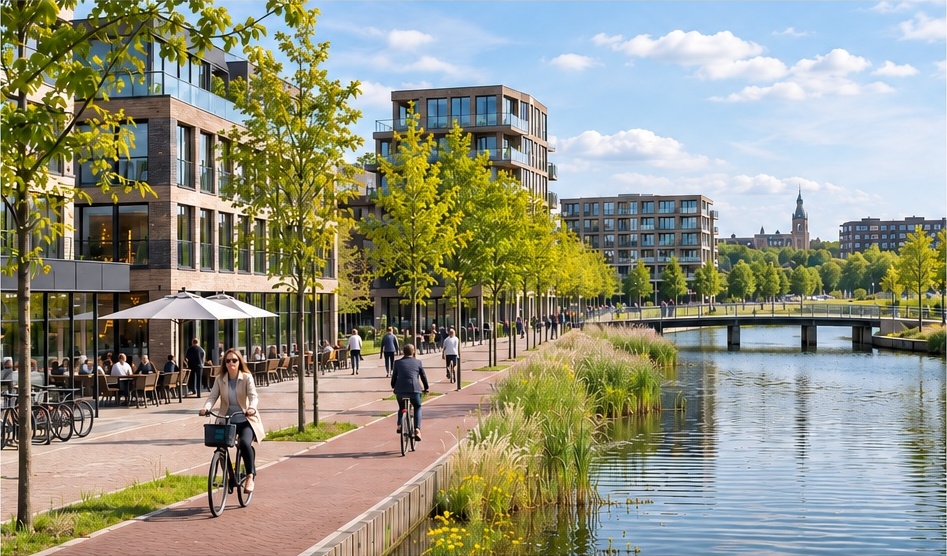
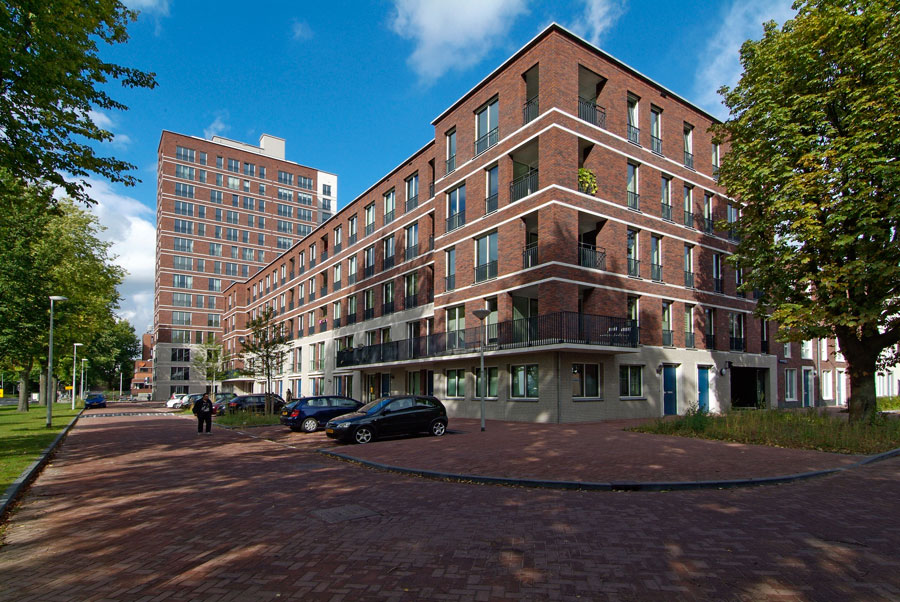
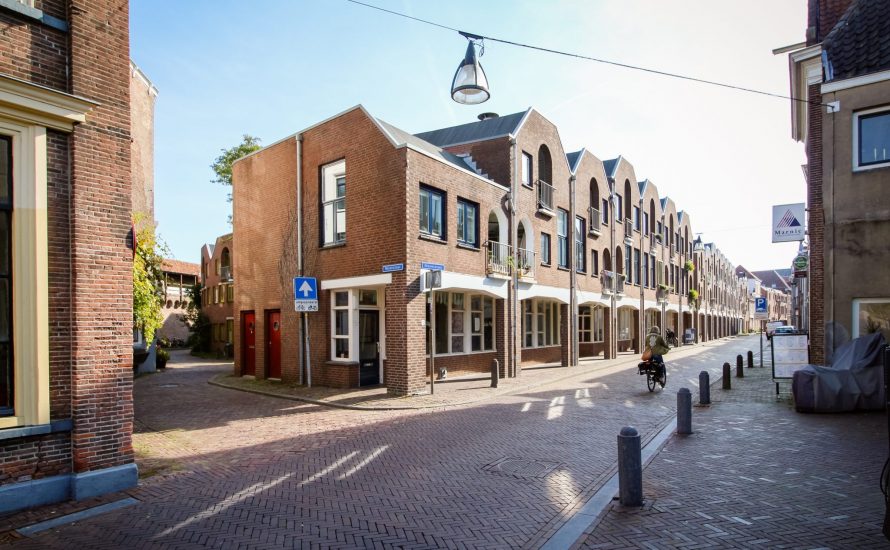
Waterfront residential neighborhood in area development Construction site and civil engineering works Delivery of new housing and public realm Overview of urban area development

Contract structure, delivery organization, and our specific role

In large-scale area development, government and market parties commit jointly over the long term and share development risk. This requires a tailored governance and organizational translation of The DUO-Model™.

Agreement & Legal Form

Cooperation Agreement, Anterior Agreement, or Joint Venture

Typically structured via a cooperation agreement (SOK), an anterior development agreement, or — where land ownership is shared — a joint development company (GEM / LP-LLC). The legal framework governs land contribution, profit, and risk allocation in broad strokes; day-to-day governance is anchored in the Organizational Charter.

Delivery & Commissioning

Joint project bureau

In this practice area, a joint delivery organization (project bureau) is almost always established under an empowered Project Director, steered by a compact Steering Committee or Shareholders’ Meeting in which public and private principals speak with one voice.

Our specific role

From SOK to project directorship

We lead negotiations on the cooperation agreement or joint venture setup, design the area-specific DUO Organizational Charter in parallel, and stand up the project bureau in practice — optionally serving temporarily as quartermaster or mandated Project Director.

Where does the emphasis lie?

The general principles and building blocks are set out on The DUO-Model™ page. Within area development, the following points require particular attention.

Financial coherence

Land contributions, upfront infrastructure investments, land development budgets, and risk allocation require a single coherent multi-year financial framework.

Project bureau and mandate

A joint project bureau executes development within clear mandates, maintaining a strict boundary between the municipality’s statutory public-law role and the joint commission.

Phasing and decision gates

Define per phase when partners decide on investments, infrastructure, and land release so governance decisions and execution stay aligned.

Discuss the structuring of your area development

Would you like to structure a new area-development PPP carefully from the outset or restore momentum to an existing project? We would be glad to think along with you.

Inner-City Restructuring

Integrated neighborhood renewal in existing urban areas with The DUO-Model™

Navigating uncertainty in an inhabited environment

Structuring for speed when you know the terrain will be complex

In inner-city restructuring, the interests of municipalities, housing associations, current residents, local businesses, and transit operators continuously intersect. Because this takes place in an inhabited urban fabric full of competing interests and sensitivities, partnership governance must anticipate that reality will unfold differently than initially planned.

Just as in greenfield development, various formats are used, such as a joint implementation program, performance agreements, a neighborhood alliance, or a joint venture. Precisely because all three pillars of The DUO-Model™ — the partnership itself, commissioning, and delivery — are heavily tested here, we separate them strictly and tailor each to this dynamic reality.

On the commissioning side, the structured preparatory track within each partner organization gets a permanent place, ensuring constituencies are carefully weighed and distinguishing clearly between what is already settled and what still requires formal decision-making.

For delivery, this calls for a fundamentally different setup: an organization built for provisionality, capable of deliberately pausing until required clarity is genuinely in place, working with adaptive schedules, phased design, flexible contracting, and disciplined community communication.

Inner-city restructuring and district renewal Renewal of housing stock and public space in the existing city

Contract structure, delivery organization, and our specific role

In the existing city, partners typically invest from their own real estate and land positions while social and political trade-offs continue throughout the process. This calls for a specific translation of The DUO-Model™.

Agreement & Legal Form

Programmatic Cooperation Agreement or District Alliance

Most projects use a programmatic cooperation agreement (SOK), performance covenants, or a neighborhood alliance between municipality, housing associations, and private developers. The partnership is designed to withstand plans proving unfeasible or encountering public pushback, while each partner invests on its own balance sheet.

Delivery & Commissioning

Coordinated program steering, agile delivery

There is often no heavy joint development company, but rather a compact program team steering coherence and interdependencies while partners deliver their own sub-projects. Because commissions emerge in phases or under conditions, delivery is designed to pause deliberately when clarity is needed — avoiding wasted design or failure costs.

Our specific role

Clarity at the top, agility on the ground

We structure the preparatory track among municipality, housing associations, and stakeholders so principals clearly distinguish settled parameters from open questions. Simultaneously, we equip delivery with tact, short escalation lines, tight feedback loops, and adaptive steering so adjustments land smoothly without stalling the entire neighborhood program.

Where does the emphasis lie?

The general principles and building blocks are set out on The DUO-Model™ page. Within inner-city restructuring, the following points require particular attention.

Phased commissioning & preparatory track

Because constituencies and stakeholders in an existing neighborhood cannot crystallize every detail upfront, we establish in advance how provisional frameworks, go/no-go gates, and interim decisions are weighed before commissions pass to delivery.

Adaptive scheduling, design & contracting

The delivery organization works not from a rigid blueprint, but with flexible schedules, staged design development, and tailored contractor and consultant agreements — enabling controlled pauses or pivots whenever an issue requires political or community clarity.

Residents, balance-sheet positions & feedback loops

Rehousing, community participation, demolition, new construction, and public-realm upgrades interlock directly. Short feedback loops from the neighborhood back to the principals’ table keep municipal and housing-association investments aligned with street-level reality.

Discuss your inner-city restructuring challenge

Would you like to structure collaboration between the municipality, housing associations, and private partners sharply and effectively? We would be glad to think along with you.

Commercial Area Transformation

Redevelopment of business parks, office districts, and retail zones with The DUO-Model™

Connecting fragmented ownership with public frameworks

Generating momentum in existing real estate with owners moving at their own pace

In transforming business parks, office locations, and retail districts, property is held by diverse owners with differing lease terms, book values, and investment horizons. Each invests based on an individual business case, while collective challenges such as grid congestion, energy transition, accessibility, and public space require coherent public frameworks.

Using The DUO-Model™ as our methodology, we structure three interconnected pillars. For the partnership framework, we design an area-wide framework or transformation agreement — enabling frontrunners to move immediately without holdouts blocking progress — detailed in plot-level anterior agreements and a Business Improvement District (BID) or entrepreneurial fund for shared facilities.

On the commissioning side, we align internal municipal departments across spatial planning, economic affairs, mobility, and energy upfront into one predictable public framework. For delivery, investment primacy remains with the property owners themselves, while coherence is safeguarded through a compact steering table and a single mandated point of contact keeping public works and private investments synchronized.

Commercial area transformation and repositioning of real estate Transformation of business park or office district

Contract structure, delivery organization, and our specific role

In commercial area transformation, investment initiative rests largely with private property owners and developers, while the municipality is indispensable for zoning, infrastructure, and public space. This requires a dedicated translation of The DUO-Model™.

Agreement & Legal Form

Framework Agreement, Anterior Contracts & BID

Typically structured via an area-wide transformation or framework agreement setting the shared direction, operationalized through plot-level anterior development agreements as owners move into redevelopment. Collective investments in energy, sustainability, or area management are frequently supported by a Business Improvement District (BID) or area fund.

Delivery & Commissioning

Private delivery, targeted area coordination

There is generally no heavy joint development company: owners and developers deliver their real estate on their own balance sheet and risk. The municipality acts as a framework-setting and facilitating principal, while a compact steering table and a single mandated desk keep private initiatives and public works in step.

Our specific role

From owner coalition to mandated area coordination

We unite fragmented property owners around a viable area vision, negotiate framework and anterior agreements, and establish a decisive municipal coordination setup — optionally serving temporarily as Area Director or Process Facilitator.

Where does the emphasis lie?

The general principles and building blocks are set out on The DUO-Model™ page. Within commercial area transformation, the following points require particular attention.

Fragmented ownership & staggered pacing

Property owners operate with different lease expirations, book values, and investment horizons. The partnership must allow owners to step in at different times without slower parties blocking frontrunners.

Alignment of real estate, energy & public realm

Mixed-use intensification, sustainability upgrades, grid congestion, and public-realm renewal interact directly. We structure fair cost-recovery mechanisms, shared energy solutions, and phasing.

Single point of contact and clear public frameworks

Nothing delays commercial investment faster than conflicting signals across municipal departments. A well-organized internal municipal track and one mandated point of contact provide market parties with predictability.

Discuss your commercial area transformation

Looking to reposition a business park, office district, or retail area with public and private stakeholders? We would be glad to think along with you.

The DUO-Model™

Dual Delivery and Commissioning Model: seven principles for a partnership that builds speed

Structure properly first, then build speed

Public-private partnerships in the spatial domain take different forms depending on the assignment. Whether it involves a greenfield site with a joint project bureau, an inner-city restructuring full of social sensitivities, or a commercial area transformation with fragmented property ownership: executive primacy shifts from case to case, and legal structures range from a cooperation agreement (SOK), anterior agreement, or integrated delivery team to an incorporated joint venture, LP/LLC structure, land development company (GEM/GOM), concession, or programmatic neighborhood alliance.

What connects all of these situations is that momentum cannot be forced through an airtight contract alone; it emerges from the quality of the day-to-day organization behind it. Whenever commissioning and delivery blur together, decisions stall, or requests enter through side channels, any partnership loses pace — regardless of how strong the intentions on paper may be.

The DUO-Model™ provides seven universal principles applicable to every legal form, practice area, and lifecycle stage — both when launching a new PPP and when revitalizing an existing partnership that has stalled:

Principle 01

Build three tracks separately yet in parallel

In many partnerships, almost all preparatory energy goes into legal and financial negotiations. Only after signatures are dry do partners begin thinking about how to organize internal decision-making and structure day-to-day delivery or area coordination.

In The DUO-Model™, we approach every partnership along three interconnected yet strictly distinct tracks developed simultaneously from day one: the partnership agreements between partners, the commissioning governance within and between parent organizations, and the delivery or coordination organization. Developing these three tracks in parallel ensures contractual terms and daily operations fit together seamlessly.

Principle 02

Structured preparatory track within each partner organization

Effective commissioning does not start at the joint boardroom table — it begins inside the participating parent organizations. On both the public and private sides, specialist departments, policy domains, shareholders, housing associations, residents, and external stakeholders all play vital roles.

If their input is not organized upfront, ad-hoc requests and scope changes find their way directly into delivery through side channels. In The DUO-Model™, we therefore establish a structured preparatory track within each partner before the principals’ table convenes. Diverse insights and interests are weighed on time, clearly distinguishing what is settled from what still requires deliberation.

Principle 03

Unambiguous decision-making and a seamless relay handoff

Regardless of whether delivery primacy rests with a private party, a government body, a compact coordination table, or a joint project bureau: a partnership only achieves real velocity when decisions are unambiguous and transferred without noise to execution.

At the principals’ table (Steering Committee, Shareholders’ Meeting, or Coordination Board), partners speak with one voice based on their preparatory tracks. Choices and commissions are articulated clearly and passed like a relay baton to delivery, preventing costly delays caused by renegotiation or conflicting interpretations.

Principle 04

Strict role discipline with a substantial mandate over the how

Speed and control emerge when every actor honors its proper role. Principals steer on objectives, frameworks, risks, and milestones — the what and why. In return, we equip the delivery or coordination organization with a substantial mandate to determine independently how those commissions are executed within agreed boundaries.

That mandate is never a blank check, but structured professional discretion anchored by a sharp hinge: concise headline reporting, short feedback loops from the field back to the principals’ table, and one clear escalation route whenever an issue touches agreed boundaries.

Principle 05

Separation between Master Contract and DUO Organizational Charter

In the master contract or corporate bylaws — whether a cooperation agreement (SOK), anterior contract, joint venture, LP/LLC, GEM, GOM, concession, or neighborhood alliance — we record solely what must be secured legally, financially, and politically at headline level: purpose and scope, contributions, risk sharing, governance, and the central authority of the principals’ table.

All operational arrangements covering the preparatory track and daily delivery are deliberately kept out of the master contract and anchored in a separate DUO Organizational Charter. Within this charter, execution is structured across seven core building blocks, allowing the organization to adapt smoothly as circumstances evolve without reopening the master contract:

1. Organization & Staffing
Fit-for-purpose delivery setup (from joint project bureau to lean program team or coordination table), role profiles, specialist competencies, and staffing from participating partners.
2. Authorities & Mandates
Exact delineation of powers of attorney and decision thresholds between the principals’ table, delivery leadership, and parent organizations, including separation of public-law and private-law duties.
3. Finance, Budget & Accountability
Structure of project or program budgets, allocation of investments, costs, and revenues, cash-flow governance, and headline financial reporting.
4. Procedures & Workflows
Operational workflows for phasing, masterplanning, decision cadences, and interdependencies between public and private workstreams.
5. Procurement & Tendering
Rules governing public procurement compliance, market engagement, and third-party contracting, tailored to joint or separate commissioning structures.
6. Facilities, IT & Operations
Practical arrangements for workspace, information sharing, document control, stakeholder communication, and overhead — scaled to organizational weight.
7. Steering, Governance & Escalation
Alignment of internal preparatory tracks in parent organizations with the principals’ table, fixed meeting cadences, feedback loops, and a clear escalation path for boundary deviations.
Principle 06

Ready to operate on the day of signing

A common pitfall after signing a cooperation agreement or incorporating a joint development company is losing months recruiting staff, clarifying mandates, and designing basic workflows.

Because the DUO Organizational Charter is prepared and adopted in parallel with contract negotiations, the delivery or coordination organization is structured and staffed at the moment of signing — converting negotiation momentum directly into visible progress.

Principle 07

Scalable to every assignment, legal form, and partnership phase

The DUO-Model™ is not a rigid template, but a modular toolkit that scales with the nature of the assignment. In large-scale area development, it often produces a joint project bureau with broad mandates; in inner-city restructuring, an agile program team built for phased decision-making; and in commercial area transformation, a compact coordination table with a single desk while owners invest at their own pace.

Moreover, the model works equally well when forming a new PPP or turning around an existing partnership that has stalled. In the latter case, we apply the same seven principles and seven building blocks to diagnose factually where friction arises — in the partnership terms, in the principals’ preparatory track, or in delivery — and recalibrate selectively without dismantling the entire partnership.

Governance and legal depth

How do the partnership contract and the DUO Organizational Charter relate to each other?

The partnership is anchored legally and financially by the cooperation agreement (SOK), incorporation deeds, anterior contract, or concession between the partners. In that master instrument, we record headline purpose, scope, contributions, risk sharing, governance, and the central role of the principals’ table. Parallel to this, we codify the practical mechanics of commissioning and the seven building blocks of the delivery organization in the DUO Organizational Charter, ensuring seamless alignment without cluttering the master contract with operational detail.

Do executives and boards lose control when delivery or coordination receives a clear mandate?

Quite the opposite. When principals immerse themselves in operational details, they create an illusion of control while losing sight of strategic priorities. Under the governance rules of The DUO-Model™, principals steer more sharply on frameworks, risks, and milestones, while the delivery organization executes at pace within the boundaries set by the DUO Organizational Charter.

How does The DUO-Model™ work for an existing public-private partnership already underway?

In a stalled PPP, we use the model as a diagnostic lens. We assess objectively whether delays stem from contractual premises, from internal preparation and alignment at the principals’ table, or from the seven building blocks of the delivery organization. Based on that diagnosis, we recalibrate the exact friction points without unnecessarily reopening the underlying agreements.

Want to test how The DUO-Model™ works for your assignment?

We would be pleased to illustrate the interplay between contractual design, commissioning governance, and a launch-ready delivery organization using your specific partnership challenge.

Team & Services

Our dedicated core team of specialists, structuring new PPPs, and targeted turnaround when partnerships stall

OUR TEAM

A compact, close-knit core team of specialists with deep hands-on experience.

To structure a new PPP carefully or get a stalled one moving again, you do not need a large consultancy — you need a few seasoned practitioners who have done it before.

Team Lead & Primary Contact Pieter C. Stoffels, LL.M. Direction, Negotiations & Governance

Alongside being a lawyer, former public administrator, and project director, I have been an entrepreneur at heart from an early age — bringing that entrepreneurial drive to every role I take on. With over 25 years of hands-on experience as director and head of project organizations in the spatial domain, I am your dedicated point of contact. I lead negotiations on partnership formation, the cooperation agreement, governance, and overall progress and quality assurance, supported by a tight-knit core team that has collaborated seamlessly for many years.

Core Team Member Contracting, Construction & Procurement Law

Responsible within our core team for nearly 20 years for drafting all contractual documentation and advising on construction and public procurement law. As a real estate attorney, involved in structuring and establishing numerous public-private partnerships across the spatial domain.

Core Team Member Real Estate Economics & Land Development Budgets

Responsible within our core team for over 20 years for all financial aspects of real estate and preparing land development models (grondexploitaties). Involved as financial expert in structuring and launching numerous public-private partnerships in urban and area development.

Specialist Network Associate Urban Design & Mobility / Transport

Trusted specialist within our team for over 15 years whenever an assignment calls for spatial depth or design elaboration, spanning urban design studies, infrastructure layout, public-realm design, or architectural massing.

Specialist Network Associate Civil Engineering

Trusted specialist within our team for over 15 years whenever civil engineering expertise is required, covering integrated water management, soil stabilization, transport infrastructure, construction supervision, and long-term asset management.

Where can you engage us?

A public-private partnership (PPP) is never a one-size-fits-all template; in practice it takes many legal and organizational shapes: from a cooperation agreement (SOK), anterior development agreement, or integrated delivery team to an incorporated joint venture, LP/LLC structure, land development company (GEM / GOM), concession, or programmatic district alliance.

Regardless of which partnership or legal structure fits your assignment, you bring us in at the critical moments when alignment between government and market must be razor-sharp. We not only design and contract the legal and financial structure, but simultaneously establish commissioning governance and the day-to-day delivery or coordination organization — or revitalize an existing PPP that has stalled.

We tailor our approach to the character of each practice area — whether area development, inner-city restructuring, or commercial area transformation. Below are the two core situations where we make the difference and the concrete roles we take on.

Designing and establishing a new public-private partnership

When government and market enter a multi-year partnership, we manage the entire setup coherently: guiding legal-form selection, leading negotiations, drafting contract documentation, and simultaneously structuring commissioning governance and the delivery or coordination organization.

Scope & our contribution

What we concretely do

We lead partnership negotiations and, together with our core legal and financial specialists, draft the entire contractual foundation tailored to the chosen vehicle (such as SOK, joint venture, LP/LLC, GEM, GOM, concession, or alliance), while concurrently organizing day-to-day governance so zero momentum is lost after signing.

  • Negotiation, vehicle selection & contracting: Leading negotiations and drafting the cooperation agreement, corporate bylaws or formation deeds, and headline governance rules aligned with risk, land, and property positions
  • Structuring commissioning governance: Designing the internal preparatory track within parent organizations so public departments, housing associations, or private shareholders and owners converge on one unambiguous mandate prior to the principals’ table
  • Tailored delivery design: Translating our seven building blocks into the right delivery structure — whether an independent operating company or joint project bureau, a lean program team with shared steering, or a public-private coordination table with a single desk
Concrete deliverables

What it delivers

A legally and financially watertight partnership structure alongside a delivery and governance framework ready to operate on the day of signing or incorporation.

  • Negotiated & drafted headline contract suite: Legally and financially sound for the chosen PPP vehicle, free from bogged-down operational minutiae in the master agreement or bylaws
  • Adopted DUO Organizational Charter: Complete with organizational model, role profiles, financial approval thresholds, mandate schedule, and escalation protocol aligned with the legal vehicle
  • Immediate execution capacity from day one: A delivery or coordination organization that builds speed within clear boundaries without side-channel interference
See how The DUO-Model™ works →

Revitalizing a stalled public-private partnership

When an ongoing partnership — whether structured as an SOK, joint venture, GEM/GOM, concession, or alliance — stalls due to shifting market conditions, policy adjustments, or blurred roles, we rapidly restore clarity and momentum.

Scope & our contribution

What we concretely do

Pushing harder on delivery never works as long as instructions and scope changes enter through side channels or partners sit divided at the principals’ table. We diagnose factually where the bottleneck originates and realign commissioning and delivery together.

  • Focused governance & bottleneck scan: Objective assessment of whether friction stems from strategic or financial direction, relationships among parent organizations, or delivery steering
  • Restoring a unified principals’ table: Channeling requests, constituency interests, and stakeholder alignment back into the preparatory track of the Steering Committee, Shareholders’ Meeting, or Coordination Board so delivery once again receives one clear mandate
  • Recalibrating mandates and working rules: Updating the Organizational Charter, decision thresholds, and escalation path — and where needed adding a targeted addendum to existing agreements — without reopening the entire PPP
Concrete deliverables

What it delivers

Stability in governance and contractual relationships, restored mutual trust, and a partnership demonstrating measurable progress once again.

  • Clear diagnosis & recovery roadmap: Supported by all participating public and private partners
  • Updated rules of engagement & mandates: Sharp boundary between headline steering (Steering Committee, Shareholders’ Meeting, or Coordination Board) and daily delivery
  • Regained momentum & workable relationships: Fewer executive escalations and renewed focus on shared outcomes
Explore realized track record →

The roles in which you can engage me and our core team

Depending on the chosen partnership structure, project phase, and your organization’s position, I take on — supported by our dedicated core team of legal and financial specialists — one of three clear roles:

Role 1 · At the negotiating table

Process Facilitator & Lead Negotiator

Acting on behalf of either the public or private partner, or as an independent facilitator between parties, I guide negotiations on legal structure, financial parameters, and contract formation to a successful close.

Role 2 · Governance & organizational design

Architect of the DUO Organizational Charter

Together with key stakeholders, I design and anchor the complete governance framework, commissioning preparatory tracks, mandates, and seven building blocks tailored to your partnership vehicle and assignment.

Role 3 · Temporarily at the helm

Quartermaster, Area Director, or Interim Project Director

I stand up the delivery or coordination organization in practice, staff key positions, and provide mandated interim leadership during launch or turnaround — as Director of a project bureau, GEM/GOM, or joint venture, or as Program/Area Director — through to a controlled handover to your permanent organization.

Starting a new partnership or facing a stalemate?

In an introductory conversation, we will review your situation and identify which role or engagement will move your partnership forward most effectively.

A partnership that builds momentum

Clear roles, concrete goals, tangible results

“When your project matters...
you want someone who has done it before”

Successful PPP Structuring
with the DUO-Model™

As a lawyer, former public administrator, and project director, I have been bringing government and market together for over 25 years in area development and other complex spatial assignments. Together with a small group of specialized associates I have worked with for years, we guide the formation of public-private partnerships and structure their execution — or guide the restructuring of an existing partnership.

Structure properly first. Then build speed

We apply the DUO-Model™, in which the partnership agreements, the design of internal commissioning, and the delivery organization are developed separately, yet in parallel.

In alignment with the principals, we structure internal commissioning within each partner organization. This gives the interests and insights of internal departments and stakeholders a clear place in the preparatory process leading to choices and decisions by the principals in the PPP.

In return, when designing the delivery organization, we grant it a substantial mandate to determine how it executes those assignments. This enables it to act independently and build momentum, while strategic trade-offs remain firmly with the principals.

More about the DUO-Model™ →
Pieter C. Stoffels
Pieter C. Stoffels, LL.M. Former Public Executive · Entrepreneur · Project Director
EXPERIENCE · 25+ YEARS IN PRACTICE

Over 25 years at the helm of public-private partnerships and complex area development programs.

Area Development Municipality of Gouda Senior Project & Process Manager

From negotiations and PPP design to structuring the project organization

Responsible for negotiations with private-sector partners on the cooperation agreement and the design and establishment of the Westergouwe Public-Private Partnership — the lowest-lying development site in the Netherlands in the Municipality of Gouda, comprising approximately 4,500 homes, infrastructure, public and commercial amenities, and public realm.

Role & outcome: On behalf of the Municipal Executive of Gouda, led negotiations with private developers on the financial, spatial, and legal terms of the Westergouwe Cooperation Agreement (SOK). Successfully concluded with a signed cooperation agreement including the organizational design of the delivery body.
Area Development Westergouwe Project Bureau · Gouda, VolkerWessels, Heijmans Project Director

Project Director Westergouwe on behalf of Municipality, VolkerWessels, and Heijmans

Following execution of the cooperation agreement, jointly appointed by the public and private partners to establish and direct the delivery of the Westergouwe area development in practice. Daily leadership of the PPP and the Westergouwe Project Bureau with >15 staff members.

Role & outcome: As mandated Project Director, established, structured, and led the Westergouwe Project Bureau over multiple years, including the delivery of over 1,200 homes, infrastructure, amenities, and public space.
Inner-City Restructuring Zoetermeer-Palenstein Joint Venture Senior Project & Process Manager

Process design and structuring of the Palenstein Joint Venture

Commissioned by the Municipality of Zoetermeer and housing associations Vestia, De Goede Woning, and Vidomes to prepare the process design and organizational setup for the ‘Nieuw Palenstein’ Joint Venture (demolition and new-build of approx. 1,600 homes).

Role & outcome: Authored the partnership and process design and subsequently directed execution across diverse public and commercial interests as Senior Project and Process Manager.
Inner-City Restructuring Rosmolenwijk & Vijfhoek · Municipality of Zaanstad Program Manager Restructuring

Program Manager for urban district restructuring in Zaanstad

As Program Manager, responsible for the integrated restructuring of both Rosmolenwijk and Vijfhoek on behalf of the Municipality of Zaanstad, focused on renewing existing housing stock, the residential environment, and neighborhood facilities.

Role & outcome: Held overall responsibility for program governance and alignment between the municipality, housing associations, and local stakeholders across both restructuring programs.
Area Development Emmen Delftlanden Head of Delftlanden Project Bureau

Integrated executive responsibility and leadership of the project bureau

For the large-scale urban expansion site Delftlanden in Emmen (approx. 3,400 homes), appointed to lead progress management, financial control, and alignment between political leadership, municipal policy, and delivery.

Role & outcome: Held overall executive responsibility for area delivery and day-to-day leadership of the Delftlanden Project Bureau.
Area Development Riverfront Development · Rotterdam IJsselmonde Principal · Executive Portfolio Holder Spatial Development

Public-private visioning & riverfront area development

As Executive Portfolio Holder for Spatial Development in Rotterdam-IJsselmonde, acted as public principal for transforming approximately 20 hectares of industrial riverfront into a high-quality mixed-use district with housing, offices, and leisure (De Veranda).

Role & outcome: As executive board member, directed masterplan visioning, public-private collaboration, and redevelopment of the riverfront into a vibrant urban residential and leisure destination.
Commercial Area Transformation Stadiondriehoek & Renovation of De Kuip Stadium · Rotterdam Principal · Mandated by Rotterdam Municipal Executive

Stadiondriehoek Area Development & Renovation of De Kuip Stadium

Mandated by the Rotterdam Municipal Executive to act as principal on behalf of the city administration for the large-scale renovation of De Kuip Stadium and the related spatial repositioning of the surrounding Stadiondriehoek district.

Role & outcome: Successfully completed the renovation of De Kuip Stadium and established the governance and launch of the integrated Olympus development project including Stadiondriehoek.
Commercial Area Transformation Southern Garden Cities Program · Rotterdam Principal · Executive Portfolio Holder Housing

Revitalization of Rotterdam’s post-war Southern Garden Cities

Co-responsible for directing the comprehensive physical, social, and economic restructuring of Rotterdam’s post-war garden cities Zuidwijk, Pendrecht, and Lombardijen, aimed at diversifying monotonous housing stock, upgrading public spaces, and enhancing neighborhood livability.

Role & outcome: In close cooperation with the municipality, housing associations, and private partners, shaped and drove the multi-year neighborhood renewal program across all three districts.
Additional key roles in public-private partnerships, area development, and governance

Blauwe Stad Project · East Groningen (design and establishment of a Joint Statutory Body between the municipalities of Winschoten, Reiderland, and Scheemda for transforming agricultural land into a recreational lake of over 800 ha, 350 ha of nature, and approx. 1,800 homes) · Zoetermeer Masterplan (day-to-day leadership of the Zoetermeer Masterplan Delivery Team of approx. 25 staff) · Zaanstad (Process Manager Hembrugterrein, Process Manager Hemmes site, Interim Head of Project Management Bureau) · Rosarium District Zaanstad (process management for residential, sports, and healthcare concept) · Executive Board Member Rotterdam IJsselmonde (portfolios of Spatial Development, Housing & Finance) · International (initiator of New Orleans City Beach and advisor on implementation of the Urban Water Plan for New Orleans).

GET IN TOUCH

Would you like to discuss your public-private partnership?

I would be glad to discuss your governance setup, partnership challenges, or a targeted intervention.

Contact

Contact

Choose the consultation format that suits you best — directly or through your executive assistant

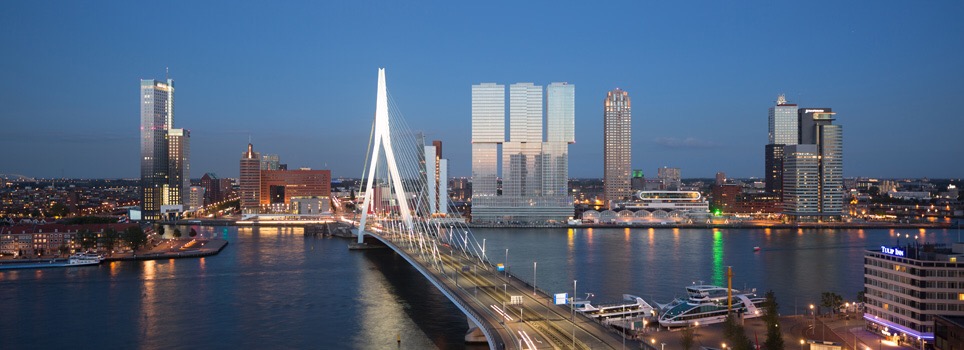
The Erasmus Bridge and Rotterdam skyline at dusk
NO-OBLIGATION CONSULTATION

Choose how you would like to connect.

Whether you want to structure a new PPP carefully from the start or get a stalled partnership moving again: select your preferred meeting format below and let us know whom we should contact to schedule.

1. Preferred consultation format
2. Contact to schedule a video consultation
Strictly confidential · No obligation